Viking Trousers / Rus Olaf Trousers, black-colored trousers
Viking-style are certainly one of the most important pieces of clothing for an authentic representation of a Viking or a Slavic.

(editar com o módulo Customer Reassurance)

(editar com o módulo Customer Reassurance)

(editar com o módulo Customer Reassurance)
Olaf's trousers were inspired by Viking Rus' (ca. 8 to 11 c.). It is believed that the Rus people were originally Scandinavian, more precisely Swedish Vikings, who crossed the Baltic Sea and invaded Eastern Europe, where they eventually established commercial colonies and gradually assimilated the mainly Slavic local population.
Pictorial evidence of the existence of loose Viking trousers can be found, for example, in some of Gotland's stone paintings (Broa, c. 8).
Our Rus pants are made of sturdy cotton fabric (twill stitch) and are very comfortable to wear. While the upper part features a rather voluminous cut, the legs are furrowed below the knee and narrow to the ankle. Wrapings or additional leg bandages (available separately in our store) can be wrapped in pants around the tight part of the calf. The wide waistband is equipped with an individually adjustable drawstring for a perfect fit. Side pockets and small side slits at the hems of the legs allow even more freedom of movement.
Note: The freight includes only the pants! The other items in the photo above are available separately in our online store.
Details:
- Sizes available: S, M, L, XL, XXL, 3XL
- Color: Black
(also available: black, dark blue)
- Material: 100% cotton
- Total length size L: approx. 108 cm
- Calf circumference size L: approx. 44 cm
- Maintenance instructions: Machine wash at 40 ° C, gentle cycle, do not dry in the machine
| Size Chart - Men - Pants | |||||
|
XXL3XL
Hip circumference
(in cm)98106114122124130
How to find the right size:
To take the measurements of the body correctly in order to determine the size of the clothes, always wrap the measuring tape horizontally around the body in the wider part. For pants, the sizes are based on the circumference of the hip.
If you happen to be between two sizes, we recommend that you increase a size.
The facility is included in the pattern and reflected in the completed measurements.
Confederate Lemat revolver of the Civil War, USA 1855 with bluish finish.
Raven Claw Fantasy Combat Knife
The handle of this beautiful Raven Claw Fantasy Fighting Knife is made from die-cast metal, and the blade is darkened to a deep black sheen while also being well-balanced. A perfect piece for Fantasy lovers. The blade is not sharp.
Comes with metal and leather sheath.
Details:
- Blade Material: 1055 High Carbon Steel
- Total length: approx. 49.5 cm
- Blade length: approx. 33.6 cm
- Blade width: approx. 3.8 cm
- Blade thickness: approx. 0.5 cm
- Weight: approx. 450g
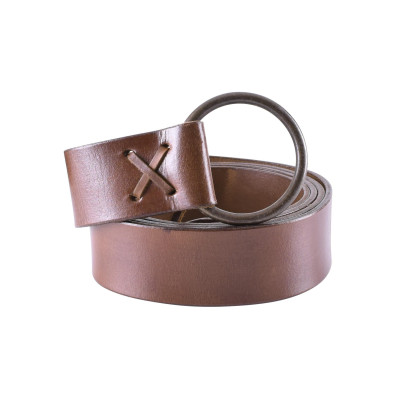
In the Middle Ages, belts were essential clothing accessories. Worn by both women and men, they allowed for a fairer fit, as medieval clothing usually had a rather loose cut.
This calf-length tunic is made of sturdy cotton fabric. It has a straight cut and side slits from the waist down. It also features a slightly shorter slit in the center of the front and back.
The tunic or tabard (also surcote, German: Waffenrock or Waffenkleid) emerged in the twelfth century and was worn by knights over their plate armor or chainmail. It was primarily designed to protect its wearer from direct sunlight on the battlefield, and the various color combinations were a decisive means of distinguishing brothers-in-arms from foes in the fray.
Mi-Parti/Miparti refers to the division of one garment into different colors (mostly two). Clothes multicoloredwere quite popular in the Middle Ages. Although such garments were predominantly vertically divided, models with a four-square checkerboard pattern in two colors are also documented. In most cases, the composition of colors had a markedly symbolic character. Examples of coloured tunics can be found, among others, in the Stuttgart Psalter and in the Morgan Chronicles M.804. In general, numerous illustrations testify to the prevalence of knight's tunics or tabards in medieval times, for example, paintings from Morgan's Bible (also known as the Maciejowski Bible or Crusader Bible), a medieval illustrated Bible from the thirteenth century, and miniatures from the Codex Manesse, an illuminated manuscript of songs from the early fourteenth century. A characteristic of the trench coat is its simple and straight cut. For an authentic look, we recommend pairing the tunic with a leather belt. Please note: delivery includes tabard only! The other items pictured above are available separately in our online store. Details: - Available sizes: S/M/L, XL/XXL - Color: mustard yellow/black (checkered) (also available: black/red, red/natural color, blue/natural color, natural color/black ) - Material: 100% cotton - Total length size L: approx. 124 cm (measured from the center of the neck to the bottom hem) - Care instructions: We recommend hand washing
Scandinavian sword of the period of the vendors with brass fist, incl. Sheath
Replica of the hand grenade model MK 2. It was a cluster grenade used by the United States Armed Forces during World War II and other subsequent conflicts until the Vietnam War. It was usually replaced by the M67 and M61 grenades. Mk 2 was commonly known as "Pineapple" (Pineapple) for its distinctive appearance.
White leather ceremonial glove - different sizes.
The corsets that form emerged in the 16th century and were part of the underwear. They had straps and gave the upper body a V shape.
I'm 18 years old. The desired silhouette has changed over the centuries. The hourglass shape was modern and the corset came strapless.
Corsets are characterized by their extremely modeling properties. They are stiff and are always associated with underwear.
Corsages (also known as corsets) are less rigid and are generally used in a visible way.
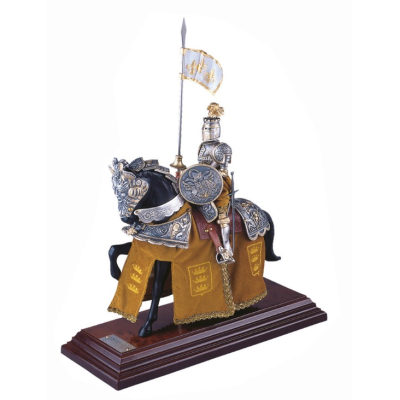
Replica of horse armor.
Excellent replica of horse armor from the collection "Equestrian Armor" manufactured by MARTO
Certificate of Origin and Quality
Pair of chainmail gloves lined with 9 mm rings. Made of galvanized steel.
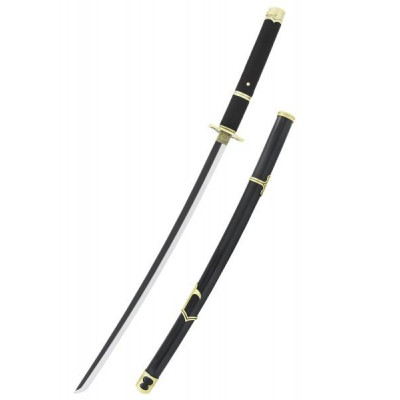
Yubashiri - Katana
This decorative sword is a replica of the Yubashiri that the Pirat Hunter Lorenor Zoro (jap. Roronoa Zoro) wielded for a time in the anime One-Piece. The Yubashiri belongs to the Skillful Grade Swords and therefore the 3rd place in the sword ranking in anime and manga.
It has approx. 68 cm long blade made of carbon steel, its tsuka is wound with a nylon cord. The unconventional decorative elements of the tsuka and saya are made of gold anodized aluminum, such as the cross-shaped tsuba, while the black-coated saya is made of wood.
Lacking the traditional Japanese ornamentation in the simple design, it resembles a Guntō (mass-produced swords for the Imperial Japanese Army) rather than a classic Katana.
The Story Behind the Sword
In the anime/manga, this sword was originally a family heirloom from Loguetown's arms dealer, Ipponmatsu.
After Zoro proved his willpower against the cursed sword Sandai Kitetsu, Ipponmatsu rushed to the attic of his shop to fetch his family heirloom, the Yubashiri, which he then gave to Zoro along with the Kitetsu.
From then on, it served the Three Swordsman-style swordsman well until he finally met his end in Enies Lobby in the battle against Navy Captain Shu, who used his demonic power to rust him, turning the sword's blade into dust.
However, Zoro kept the remains of his loyal sword for a while longer, until he finally found a suitable final resting place in the Thriller Bark at the Rumbar Pirates' Grave.
Chain mesh dimension with triangular umbrella
Made of unriveted round rings.
The blackened surface of the rings provides corrosion protection (rust).
We call this type of butted mild steel blackened mesh quota.
Usually made from cattle or goat horn and used as a drinking vessel in many cultures at different time periods, the drinking horn had great significance, especially for ceremonies. It continued in service until the early modern period, especially throughout Germanic Europe. A particularly popular drinking container during the early Middle Ages in Scandinavia, it was mentioned in both the Prose Edda and the Poetic Edda. Although horn fragments from the Viking Age are rarely recovered in archaeological excavations, the number of preserved metal horn fittings leads to the assumption that their use was much more widespread than actual horn finds indicate.
This Viking horn is handmade in horn, polished, and adorned with a carved motif of two intertwined ravens. In Norse mythology, the two ravens Hugin and Munin (or As the horn is an organic product, natural variations in color, shape, size, weight, and volume are expected.
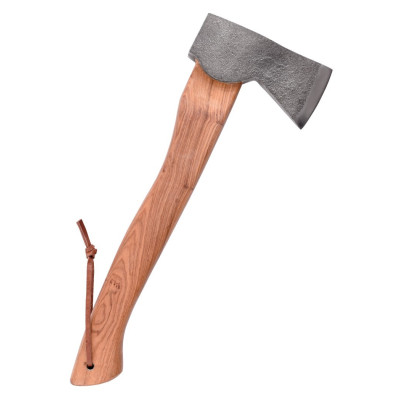
Viking Axe , Hand Forged Steel, Type C
Whether it was used to chop down trees, build ships, houses and furniture, or wielded in battle, the axe was an indispensable and versatile tool for the Vikings. The shape and size of the Axe heads were determined by their intended use. There were also elaborately adorned axes that were more of a status symbol and were often buried next to their owner. Today, Viking axes are popular collector's items and often used in movies, TV series, and video games to convey the image of the wild and fearless Vikings.
In terms of shape, the head of the Viking axe we offer here is classified as Petersen type C. The blade of this bearded axe is hand-forged in high-carbon steel and the handle is made of sturdy ash wood.
Note that this medieval axe is not a battle-ready weapon. It was designed primarily as a collector's piece or decoration/display and is in no way suitable for combat reenactment. In addition to its quality as a collectible, it is also perfectly suitable as an accessory, for example, to complete your costume, and will make perfect your transformation into a proud warrior.
Details:
- Blade material: high carbon steel (non-stainless)
- Cable material: ash wood
- Overall length (with shaft): approx. 60 cm
- Barrel length: approx. 56.5 cm
- Barrel thickness: approx. 2.5 x 3.5 cm
- Head: approx. 18 x 12 cm
- Weight: approx. 1300 g
Specifications may vary slightly from part to part.
The steel used here is not rustproof and may have slight surface stains in some places. We recommend that you do blade maintenance regularly, for example using Ballistol Universal Oil, which is ideal for taking care of steel.
9th century Viking Axe
Hand-forged heavy carbon steel
Total length: 48 cm
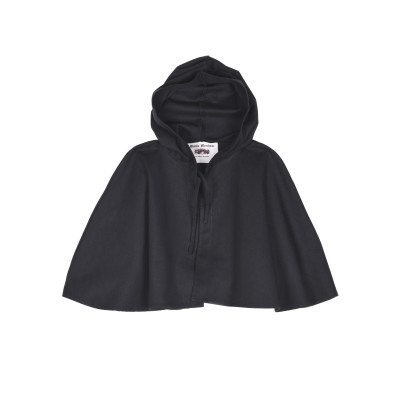
This Gugel is made of sturdy canvas and has a very comfortable trim. The head part is wide and has front closure by mooring. It is modeled after high medieval examples.
The most distinctive feature shared by all types of gugels is that they have been tailor-made to cover the head and shoulders. The Vikings were the first proven known to wear this specific type of hood. In the High Middle Ages, it became an integral part of the daily clothing of the commoners and was worn by peasants, craftsmen, travelers and the like. The 14th century brought some changes in the design of the gugel, which became fairer and often adorned with ornate ornaments. But by the early 16th century, it had fallen out of fashion and was rarely used.
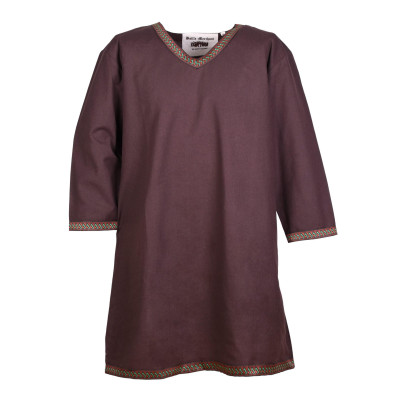
In ancient times, tunics were worn mainly on the skin as underwear. But by the early Middle Ages, its use had changed and the tunics became a common piece of outerwear. The preserved fragments are few, but many contemporary illustrations, such as the Bayeaux Tapestry or illuminated miniatures/manuscripts, provided evidence of what medieval garments looked like and how they were generally worn.
Viking Trousers / Rus Olaf Trousers, black-colored trousers
Viking-style are certainly one of the most important pieces of clothing for an authentic representation of a Viking or a Slavic.