Active filters

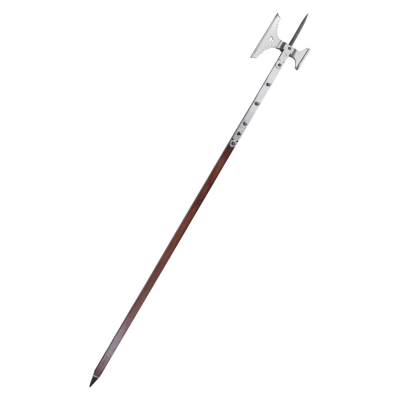
Alabarda Medieval  - 1

Alabarda Medieval

€144.59
Availability: 9 In Stock

The Halter is a wooden beam gun about two meters long, which has in its "head of arms" a spearhead like a top pectoral, a cross blade in the form of an axe blade on one side and the other pectoral punching or hooking smaller by its opposite.

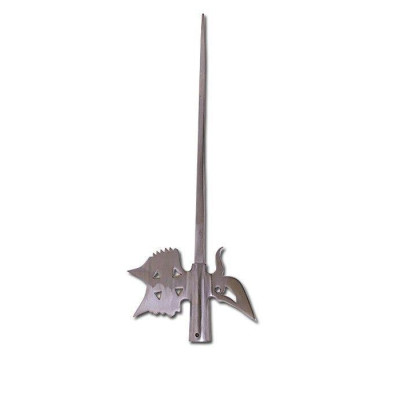
English Alabarda  - 1

English Alabarda

€61.20
Availability: 4 In Stock

English alabarda forged in carbon steel.

Details:
Length:approx. 56.5 cm

Width: 23 cm

Does not include wooden shank.

To purchase the wooden rod

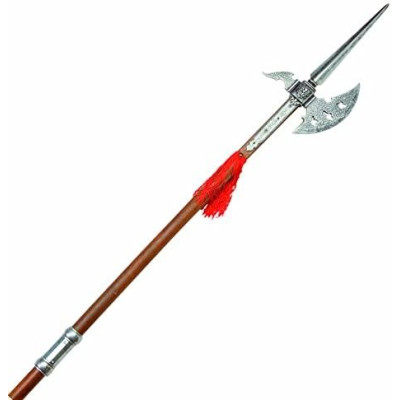
German Alabarda  - 6

German Alabarda

€110.00
Availability: 5 In Stock

It was used with great success as an infantry weapon, from the end of the Middle Ages to the 17th century.

It was his well-deserved reputation that many troops or elite nobility used "flashy" versions, with some military entities, which are using these days in public demonstrations and military parades and ceremonial weapons. Today, the Vatican's Swiss Guard uses this weapon not only ceremonial, but are also trained to use it as a weapon.

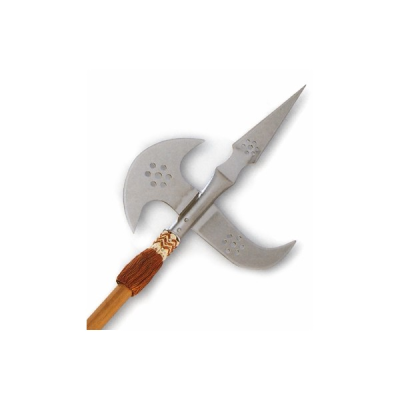
Hand-forged carbon steel halberd The Greek Condor Spear was inspire...

Hand-forged carbon steel halberd

€110.00
Availability: 29 In Stock

Halberd hand forged carbon steel.

Height: approx. 41 cm

Width: approx. 13 cm

Delivery includes rosewood shaft, screwed in the middle.

Length: approx. 180 cm

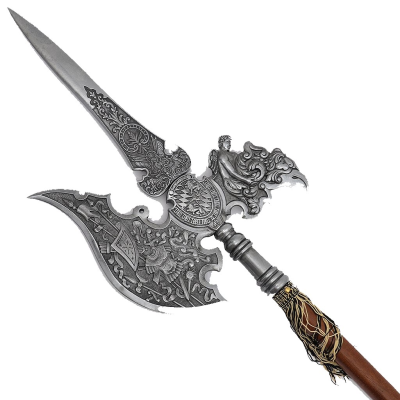
Medieval Alabarda decorated with a relief S.XVI  - 2

Medieval Alabarda decorated with a relief S.XVI

€130.00
Availability: 7 In Stock

The Halter is a wooden beam gun about two meters long, which has in its "head of arms" a spearhead like a top pectoral, a cross blade in the form of an axe blade on one side and the other pectoral punching or hooking smaller by its opposite.

Medieval halberd decorated with an S.XVIII relief  The total length...

Medieval halberd decorated with an S.XVIII relief

€130.00
Availability: 9 In Stock

Pike, polearm widely used by infantry, mainly to deal with cavalry attacks and charges.
Spears were first used by the ancient Greeks, in the famous phalanxes, which were large squares composed of rows of pikemen, called "foot companions". At the end of the Middle Ages, its use was reinvented by the Swiss, mercenaries valued for more than two centuries. At the beginning of the Modern Age, variants emerged, with the model of the Spanish Tercios being the one that prevailed.
Clearly defensive in nature, pike was used mainly in defensive or cover tactics: to avoid charges, slow down cavalry, or defend positions and positions.
The end of spears, at the beginning of the eighteenth century, occurred when the musket, more powerful than the arquebus, could carry a bayonet, serving as a spear in case of hand-to-hand combat. Changing power from firearms to spears.

  • • Wooden handle.
  • • Lifesize
  • • Length: 205cm