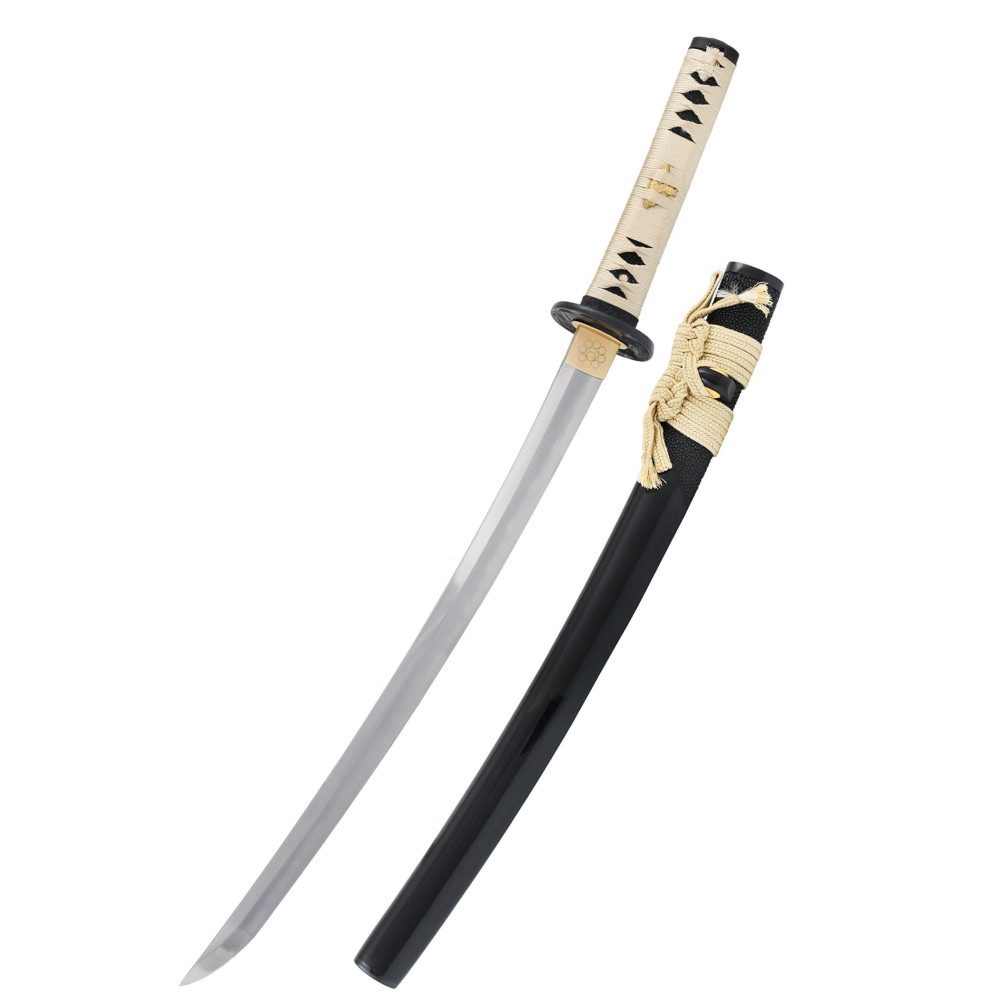
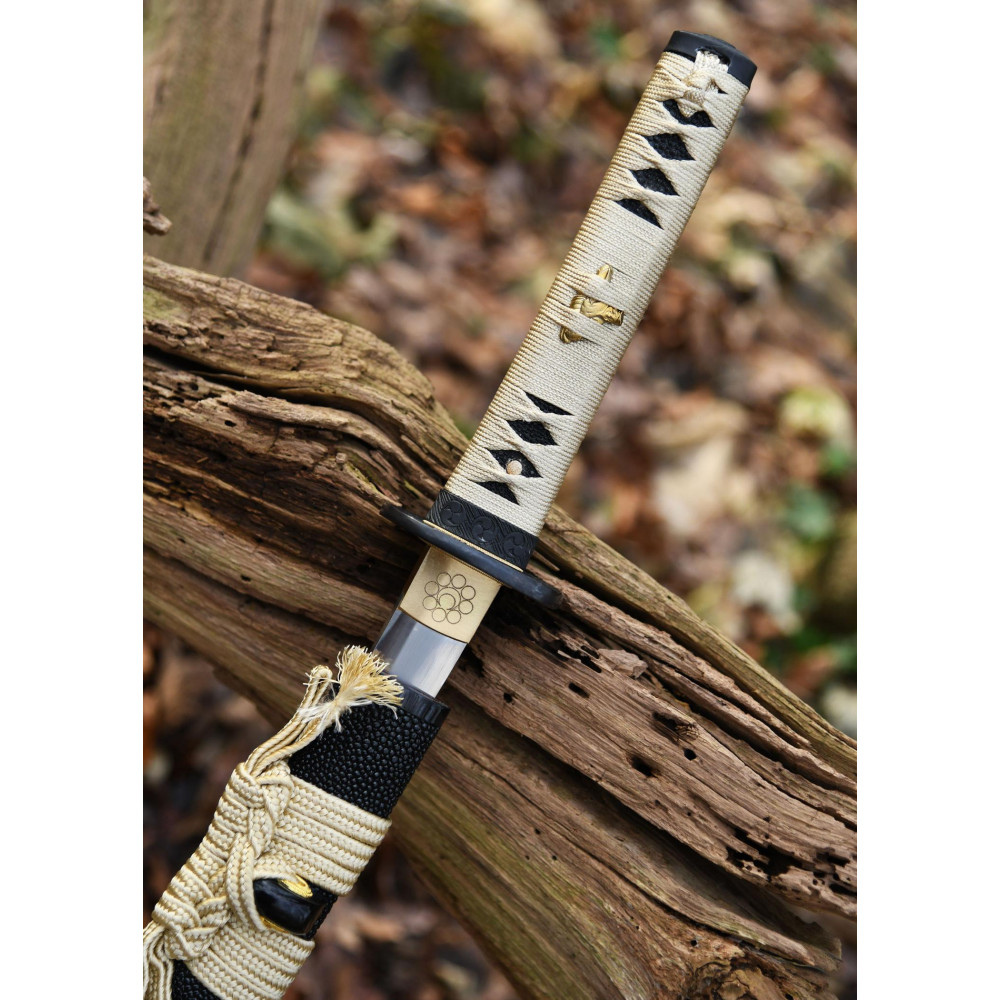


This masterfully forged Samurai sword features a beautiful wavy hamon evenly and
Finely rendered snake motifs adorning the tsuka, fuchi and tsuba.

(editar com o módulo Customer Reassurance)

(editar com o módulo Customer Reassurance)

(editar com o módulo Customer Reassurance)
The Wakizashi Snake comes with a unique decorative word.
The corresponding Snake Katana (product number SH8330) is also available to complete your collection.
Each Wakizashi comes with a custom fabric bag for proper protection and a Japanese blade maintenance kit.
Made by Hanwei.
Main features:
- High carbon steel blade T10
- Ornamental saya
- With matching fabric bag
Details:
- Blade material: High carbon steel T10
- Total length: approx. 71 cm
- Blade length: approx. 52 cm
- Cable length: approx. 17.5 cm
- Weight: approx. 1400 g
- Manufacturer's product number: SH8332 As
Cap, Medieval scarf, natural color
This piece of rectangular fabric is made of plain cotton fabric and features rolled-up hems. Can be tied as a call cap (wrap instruction) or as a headscarf for medieval reconstruction, but it is also versatile in modern everyday life. It can be worn as an elegant hair band, a turban, a shawl over the shoulders or a scarf elegantly wrapped around the neck. In the Middle Ages, married women were expected to wear a headdress (hence the German expression unter die Haube kommen).
, which literally translates as "getting under the hood" and is still a common idiom for "getting married"). In medieval times, there were many different ways for women to cover their heads, for example, with a smooth veil or with ruffles/goffered (with or without a tip on the neck), a cap, a cap, a barb and fillet, a scapular (a hoop/garland decorated in the shape of a crown, often worn in combination with a veil) or a cap.
There were several methods for tying a cap, but it was usually tied to the forehead, chin, and back of the head and always hid the hair. Historical illustrations of caps can be found, for example, in the Weltchronik - Der Stricker - Karl der Große (engl. World Chronicle -The Knitter - Charlemagne ), a manuscript on illuminated parchment written by Rudolf von Ems around 1300, or in the Morgan Bible (also known as the Maciejowski Bible or the Crusader Bible ), a thirteenth-century illustrated Bible.
Details:
- One-size-fits-all - approx. 180 x 50 cm
- Color: natural
- Material: 100% cotton
- Care instructions: Machine wash at 40°C, gentle cycle, do not machine dry
Please note: Delivery includes cloth only! The other items in the photo above are available separately in our online store.
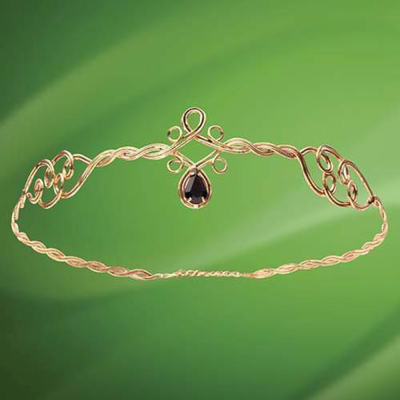
This delicate crown is made of aged brass and is decorated at the front with a stone, onyx in the form of tear and imitation. A chain with clasp at the back allows you to adapt to any size up to a diameter of 61 cm.
Wooden dial prepared for 13 swords. NOT INCLUDED. Swords.
RRZ9 Knitted quota shirt, Haubergeon, riveted, zincada
Battle-ready
The haubergeon (= small Hauberk) is a mid-sleeved knitted shirt that reaches up to the thighs.
The RRZ mesh quota
it is manufactured with round rings of galvanized steel. Each ring was riveted by hands with round rivets. It is woven in pattern 4 in 1.
Galvanization offers - in contrast to the natural and smooth mesh finish - a fairly good protection against corrosion.
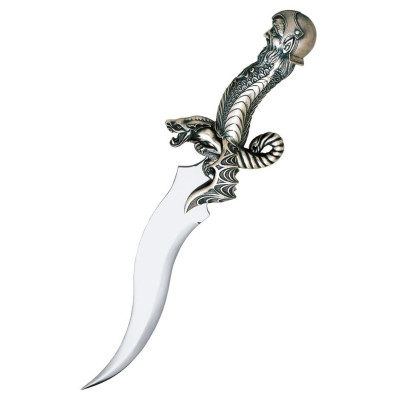
Merlin Dagger, Marto
Its name means FALCON, when he was born of the beautiful Lady of the Lake, the great druid Hafgan, from whom Merlin was supposed to learn all his magic, announced the birth of the Great Lord of Light. His grandfather taught him to be a great warrior and tireless defender of the Empire.
.30 caliber M1 Garand, WW2, USA, 1932. The M1 Garand carbine (formally United States Rifle, Caliber 30-06, M1) was the first semi-automatic rifle for the United States to become a common infantry rifle. It officially replaced the Springfield service rifle in 1903 as in 1936, until it was replaced by the M14, which derives from the M1, in 1957.
Charles V shield with fleur de lis details on the side and shield in the center.
Charles of Austria (or Habsburg) (February 24, 1500 – Monastery of Yuste, 21 September 1558) was king of Spain as Charles I (1516–1556), who entered in his person the crowns of Castile and Aragon, and Emperor of the Holy Roman Empire as Charles V (1519–1558).
Son of Joan of Castile, known as Juana la Loca and Philip the Beautiful, and paternal grandson of Maximilian I of Austria (Habsburg) and Mary of Burgundy (who inherited the Netherlands, the Austrian territories and the right to the imperial throne) and the Catholic Kings, who inherited the Kingdom of Castile, Naples, Sicily, India, Aragon and the Canary Islands through his mother.
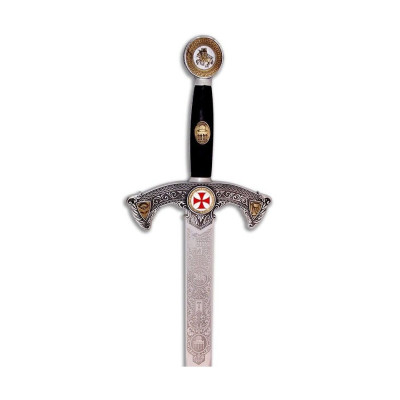
Templaria sword with stainless steel blade decorated with sculptures, leather grip and handles decorated with the Knights Templar.
These medieval hoses (also called chausses) are made of cotton fabric and equipped with laces with metal tips. They are cut into bias, which gives them a natural elasticity and greatly increases the comfort of use. Small side slits on the hems make it easy to put on the shoes. The appearance and cutting of these hoses can be historically attributed to the High Middle Ages.
Medieval Templar Knights handbag made of genuine dark brown leather of the best quality. On the front, includes the design of the Templar cross in red leather and decorative metallic details. Ready to put on any type of belt.
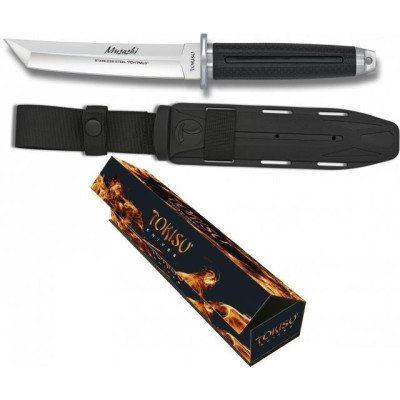
TOKISU knife, model "Musashi" Made of CNC, blade with edge and tip in stainless steel, 7Cr17MoV.Company in non-slip rubber, with stainless steel handle and handle, hole to fasten the cord. Hard case in black. Presentation box with magnetic clasp.
This sturdy medieval belt is made of thick, full-grain, vegetable-tanned buffalo leather. The surface and edges are polished and lightly coloured, giving the leather its characteristic worn look.
All edges are reinforced with stitching, making the belt particularly durable. Metal rings on the sides allow you to attach all kinds of useful items, such as weapons, bags or other utensils.
This belt can be used by both men and women. Whether you're a Viking, a pirate or simply for everyday wear, this belt adds a special touch to any outfit or outfit.
Details:
- Material: Vegetable-tanned buffalo skin, brass buckles and rivets with antique finish
- Material: Brown or black
- Total length: approx. 131 cm
- Width: approx. 5.5 cm
- Thickness: approx. 2-3 mm
- Inner diameter of the rings: approx. 2.8 cm
- Weight: approx. 220 g
- Circumference: approx. 73 cm - 119 cm
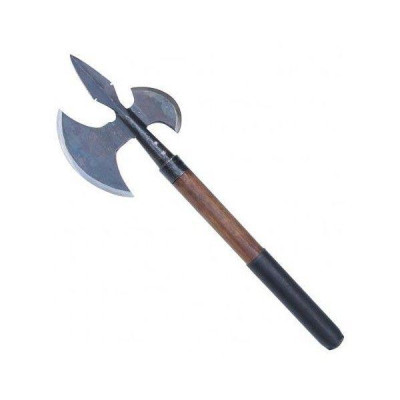
Used since the time of Alexander the Great and nearly cost him his life in the early stages of his campaign, this Sagaris axe is truly a masterpiece of history. So make sure to use it when depicting Persian guards, Scythian horse lords, or even steppe horse warriors.
The axe head is hand-forged from durable carbon steel, making it extremely sturdy and durable. The handle is made of genuine teak wood and ends in a sturdy tip. This axe can be sharpened depending on the use. Its total length, including the stock, is approximately 24 inches. Weight: 950 grams.
This generously sized mug/mug with handle is handmade from cattle horn, polished and adorned with an engraved horse motif (Lords of Horses).
The rustic and highly decorative container that we offer here is not only ideal for reconstitution purposes, but also for everyday use. Whether in a medieval setting or a modern home, it will be a real eye-catcher at any dining table.
For hygiene reasons, the glass is sealed on the inside with a food-safe varnish, so you can enjoy your favorite beer (or mead) to the fullest.
A great gift idea for modern day Vikings!
Details:
- Material: genuine cattle horn (buffalo)
- Engraved with Horse Lords motif
- Height: approx. 15 cm
- Weight: approx. 350 to 450 g
- Capacity: approx. 650 to 800 ml *
The mug is not calibrated and is therefore intended exclusively for private use.
Horn mugs are not dishwasher safe and should be cleaned thoroughly before first (and after each) use with warm water and a soft cloth. Do not use harsh cleaning agents that may damage the protective coating.
*Please note that specifications vary from part to part and that the above images are for reference only. Because horn is an organic product, natural variations in color, shape, size, and volume are expected. The capacity of the mug may vary from approx. 650 to 800 ml, the color may vary from black to any shade or combination of brown, yellow or ivory. Each cup is a handmade and unique piece, and yours will be chosen at random from our stock.
Additionally, its unique design makes it an effective tool for vampire elimination. This functional naginata 15125 is an excellent choice for experienced vampire hunters or those looking for an effective weapon for protection. With a total length of 180 cm, it has an impressive size that is perfectly suited for handling in combat situations.
The blade of this naginata is 54 cm and is a sharp blade that you can cut easily. Because it is hand-forged, the level of detail is impressive, making it an attractive piece for display. The weight is 1.75 kg, which also makes it easy for any skilled vampire hunter to handle.
With its ability to cut and pierce, this naginata is an ideal choice for anyone looking for a versatile tool for hunting vampires. Its functional design is a testament to the attention to detail and craftsmanship that has gone into its construction. In addition, the high-quality finish makes this functional naginata 15125 a desirable collector's item for lovers of antique swords.
To conclude, this functional naginata 15125 is an impressive sword, made with quality and skill. Her sturdy body and blunt cut make her capable of dealing with any legendary evil adversary. If you're looking for effectiveness in fighting vampires, this naginata is the ideal tool to have. Don't wait any longer and get yours today.
This masterfully forged Samurai sword features a beautiful wavy hamon evenly and
Finely rendered snake motifs adorning the tsuka, fuchi and tsuba.